
ESSAY
While There Is Still a Before
What is AI changing in human judgement, and what should we record before the last generation trained without it has left professional life? Essay 04 by David J. Norris.
·
November 23, 2026
·
Narrative nonfiction with notes and references
Every profession still has people who learnt to judge without AI. They are the only baseline we have.
In the Serengeti, a disease changed the fate of animals, grass, fire and trees. It took generations of observation to understand the relationships. Today, intelligent machines are altering the work through which people learn to notice, decide and take responsibility. Some of those changes may expand human capability. Others may be harder to see until the people who remember different ways of working have gone. This essay asks what we ought to be observing while the comparison is still possible.
David J. Norris · Notes on Human Agency · Essay 04 · Narrative nonfiction with notes and references · Free to read and download.


The record we are not keeping
Aviation deliberately preserves skills that ordinary flying rarely requires. Medicine is beginning to investigate what clinicians retain when AI assistance is taken away. Organisations are redesigning jobs faster than the consequences for professional learning can be known. These stories are connected by a difficult question: what will future researchers need to know about the conditions in which judgement was formed?
What must we observe now, while there are still people who learnt to judge before AI?
This is a standalone statement section. It could be visually emphasised with large typography and generous whitespace.
What this essay follows
This is a four-item content section. It could be displayed as four cards, a grid or a numbered editorial list.
- The Serengeti - How generations of observations revealed consequences beyond the original intervention.
- The cockpit - Why aviation continues to practise the skills that automation makes easy to neglect.
- Professional learning - What early studies can and cannot tell us about AI-assisted expertise.
- The future archive - The records we may one day wish we had kept.
Reader orientation
For educators, professionals, researchers and people designing work with intelligent systems. Also for anyone interested in the things that make human judgement possible — and the difficulty of knowing what is changing while we are part of that change.
Where this sits in the series
This section explains how Essay 04 connects to the previous essays.
- The Brain Commons — asks how human capability is shaped through shared conditions.
- Where Will Judgement Live? — examines what becomes of responsibility and capability when AI reorganises work.
- While There Is Still a Before — turns to a historical problem: what evidence will survive when the people who experienced different arrangements have gone?

WHERE THIS SITS
The Brain Commons
This essay belongs to The Brain Commons — a lens on the shared conditions that sustain or deplete human agency.


Continue the sequence
What Are We Building Towards When We Build Brain Capital
Individual capacities are real. But they are not privately produced, and they cannot be protected by asking individuals alone to adapt. The central claim of the work, made at human scale.
Where Will Judgement Live?
On AI and persuasion — and on flattery, the most intimate and least visible form of cognitive capture: a machine returning a sharpened image of your own thinking, faster than you could make it yourself.
The Brain Commons
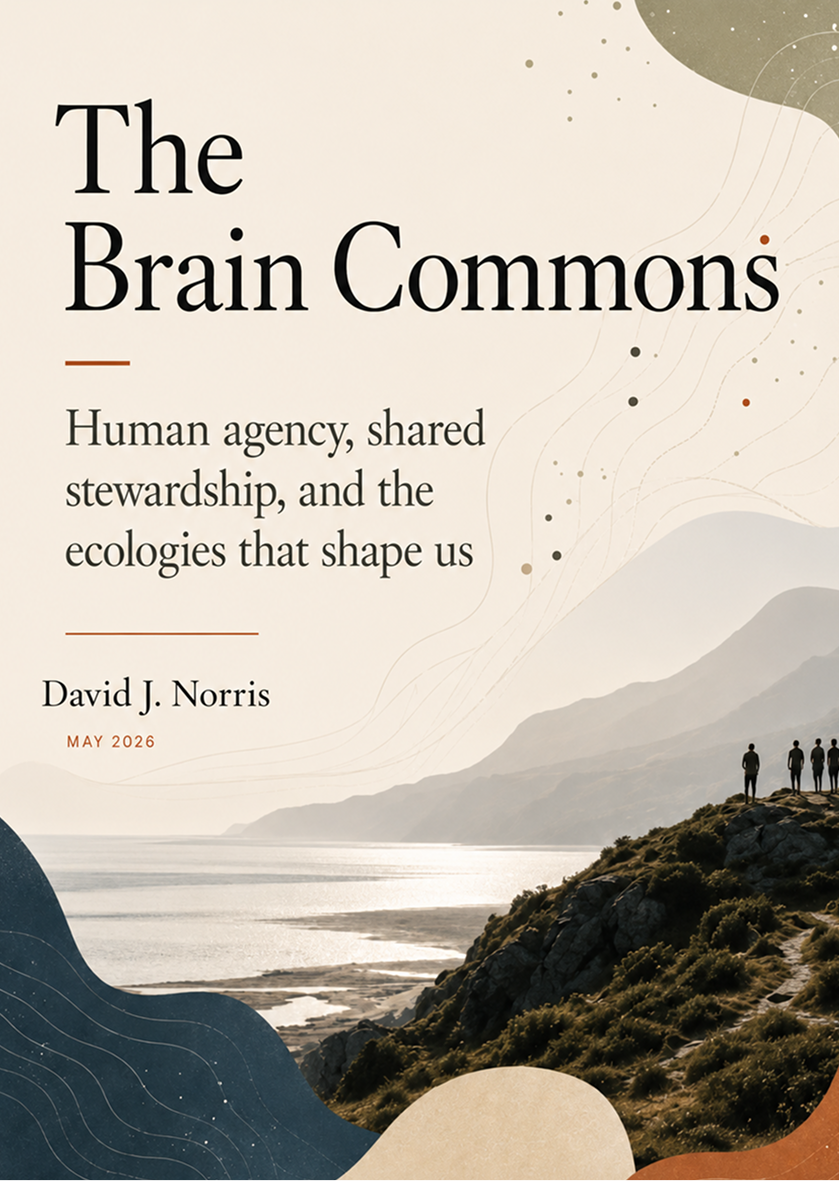
Human agency, shared stewardship, and the ecologies that shape us
What if the struggle we see in a person is also telling us something about the world around them?
The Brain Commons puts the person and their surroundings back in the same picture.
It asks how relationships, work, technology, care and institutions shape what someone can actually do, and what responsibility follows once those influences become visible.

What Are We Building Towards When We Build Brain Capital
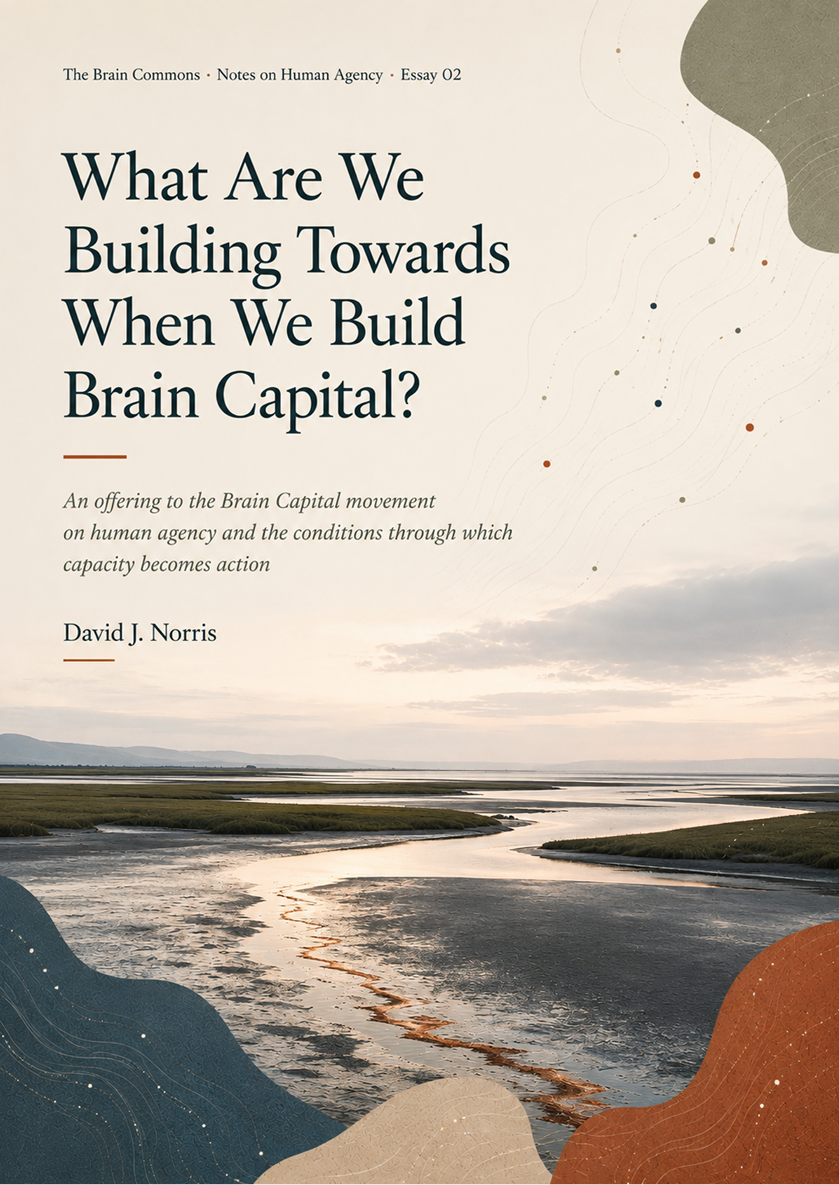
An offering to the brain-capital movement on agency and the conditions through which capacity becomes action
A person can have capability and still lack the room to use it.
This essay asks what sits between what people hold and what their circumstances let them do with it.
Where Will Judgement Live?
What AI implementation does to the capability it depends on
AI can improve performance while quietly reducing the human practice that future judgement depends on.
Most implementation measures tell us whether the system works.
Far fewer ask what people stop learning once it does.

The conversation around this essay continues on

Bring the work into the room.
Some of this work belongs in rooms where decisions are made: universities, health systems, public institutions, leadership teams, conferences, committees and organisations holding a hard question.
David is available for keynotes, panels, lectures, webinars, facilitated enquiries, advisory conversations and collaborative work where questions of human capability, brain health, AI, judgement, care and institutional conditions are in play.

Human capability, agency, attention, care and the conditions that shape us.
Brisbane, Australia
This work is written on the lands of the Turrbal and Yagara peoples. I acknowledge their custodianship of Country and their elders past and present, and the truth that the conditions I write about — attention, care, participation, stewardship — have been practised on these lands for tens of thousands of years.

